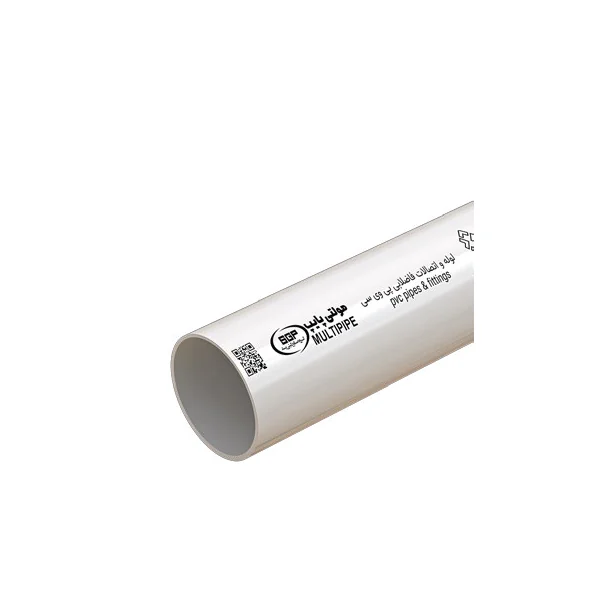
Drainage performance depends on more than pipe material. Diameter, slope, routing, ventilation, joint quality and support must work as one system. PVC‑U is widely used because it offers a smooth bore, manageable weight and repeatable joints—but only when the product is intended for the application and installed correctly.
What is PVC‑U and where is it used?
PVC‑U is unplasticized poly(vinyl chloride), a rigid material used in several types of piping. ISO 3633 specifies PVC‑U pipes and fittings for domestic soil and waste discharge, associated ventilation and rainwater pipework inside buildings; it excludes buried pipework. “PVC‑U” alone does not identify the application, so the declared use, standard and manufacturer documentation must also be checked.
Sizing: why one diameter cannot suit every route
The correct diameter depends on the fixtures served, discharge load, horizontal length, changes of direction, available slope and vent arrangement. A washbasin branch and the main stack do not perform the same duty. Oversizing without calculation is not automatically safer; the design must support transport, ventilation, cleaning access and coordination with the building.
- Use the diameter shown in the approved services drawing.
- Check branches, stacks and collectors as separate parts of the system.
- Use the correct reducer orientation in the direction of flow.
- Keep cleanout and inspection access available.
Drainage slope: steeper is not always better
Gravity drainage needs a continuous fall, but the value must be selected for the diameter and applicable project rules. Insufficient fall can reduce transport performance, while an arbitrary steep route can create coordination and jointing problems. Generic online figures should not replace the project design.
- Set out levels: mark the start, end and support elevations before jointing.
- Maintain continuous fall: avoid sags, backfall and abrupt level changes.
- Recheck after supporting: pipe weight and support adjustment can change the actual slope.
How to make a reliable solvent-weld joint
Joint quality begins with a square cut. Deburr—and chamfer when the manufacturer requires it—then ensure the pipe and socket are clean, dry and undamaged. Use only the specified cement or primer within its shelf life. Application amount, sequence, insertion depth, holding time and cure time must follow the product instructions.
- Dry-fit and confirm the fitting orientation before cementing.
- Do not use thickened, contaminated or expired cement.
- Hold the joint for the initial set time specified by the manufacturer.
- Wait for the stated cure time before testing or service.
Installation inspection checklist
| Area | Required check | Common mistake |
|---|---|---|
| Route | Continuous slope and inspection access | Sag or backfall |
| Direction changes | Suitable fitting and smoother flow path | Too many sharp bends |
| Joint | Square cut, clean surfaces, full insertion | Burrs, wrong cement or late adjustment |
| Support | Spacing appropriate to diameter and route | Wide spacing or point loading |
| Testing | After curing and before concealment | Early test or concealed defective joint |
What to check before buying
- Manufacturer, size, application standard and traceability marking are legible.
- Pipes are straight and free from cracks, damaged ends or distorted sockets.
- Fittings, cement and tools are compatible with the selected system.
- Quantities come from the drawing, with a reasonable allowance for site waste.
- Final price and stock are confirmed before ordering.
Common mistakes
- Copying a diameter from a different project
- Mixing unverified components
- Using an unsuitable fitting at a horizontal direction change
- Ignoring ventilation and cleanout access
- Concealing the route before inspection and testing
- Leaving pipe exposed to impact, excessive heat or prolonged sunlight without protection
Frequently asked questions
Which drainage pipe size is right for a building?
It depends on discharge load, fixture type, route length, slope and ventilation. Follow the services design.
Is a steeper slope always better?
No. The fall must be continuous and remain within the project design and applicable rules.
Can different brands be mixed?
Only when dimensional and application compatibility is explicitly confirmed.
When can a joint be tested?
After the solvent cement cure time specified for the product, diameter and site conditions.
Sources and methodology
This guide supports preliminary selection. It does not replace a services calculation, installation drawing, applicable code or manufacturer instructions.